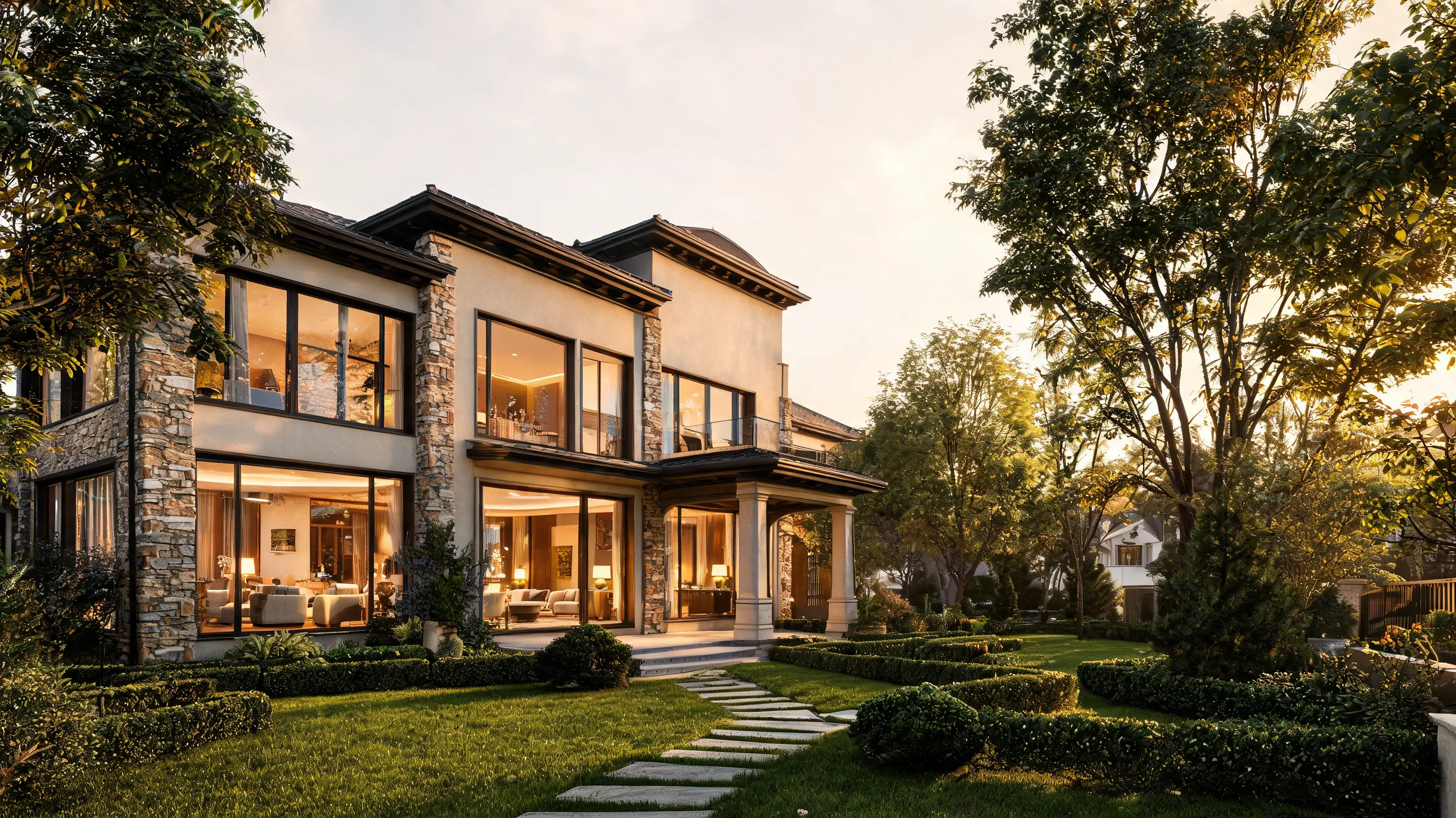
Purchasing a premium home is a major financial and personal decision, where every construction detail directly influences the quality of life and the long-term value of the investment. When you begin this journey, the first essential step is to understand exactly what to check before buying a villa to ensure that beyond the striking design lies a structurally sound building. Our agency proposes a transparent approach: we promote properties through cinematic video materials and detailed 4K HDR photographs, offering sellers a 3% listing commission, while buyers benefit from a 0% commission. However, regardless of how attractive the visual presentation is, a rigorous technical and legal analysis remains mandatory before signing any property transfer document.
What to Check Before Buying a Villa: From Aesthetics to Structure
Professionally produced premium presentation materials are designed to highlight the building's volumetric design, natural light, and intelligent space layout. However, the first visual impression offered by cinematic videos and 4K HDR photographs must always be backed by a cold analysis of the structural elements. Elegant finishes can sometimes mask workmanship defects or insulation issues that will only manifest after a rainy season or a harsh winter.
A detailed technical evaluation, carried out by an independent specialist before signing the pre-sale agreement, is essential to avoid major unforeseen expenses in the future. In today's real estate market, there is a major difference between a villa built specifically for a quick resale, where the focus is often on optimizing structural costs in favor of attractive exterior finishes, and a building executed to rigorous structural safety standards, where the quality of core materials was never compromised. An objective analysis of the construction will show whether the asking price reflects its actual value.
Load-Bearing Structure and the Quality of Building Materials
The load-bearing structure is the foundation of the entire investment. When analyzing what to check before buying a villa, the quality of the structure must be evaluated with maximum priority by an independent structural engineer. They will analyze the load-bearing structure, from the quality of the poured concrete (classes such as C20/25 or C25/30) to the correct dimensions of the pillars, beams, and corner columns. Cracks in load-bearing elements or concrete slabs can signal serious construction errors, uneven soil settlement, or seismic design flaws.
Checking the building's technical logbook is mandatory and must not be skipped under any circumstances. Correlate the phase-approval reports with the reality on the ground. These documents, signed by the site supervisor and building inspectors, certify that the steel used (for example, BST500 reinforcing steel) and the quality of the concrete correspond exactly to the approved technical design. Request the laboratory tests for the poured concrete if they exist in the building's technical file. Any refusal by the seller to provide these documents is a major red flag.
Waterproofing and Thermal Insulation: The Shield Against Moisture and Heat Loss
In parallel with the structure, identifying water infiltration is vital. Carefully inspect the waterproofing system in the basement, semi-basement, bathrooms, and at the roof level. Areas with bubbling plaster, a persistent musty smell, or subtle damp patches indicate faulty waterproofing at the foundation or terrace levels. Subsequent repairs for compromised waterproofing often involve massive excavation around the house and enormous costs.
A premium home must ensure high comfort with low monthly operating expenses. Evaluating the quality of the exterior thermal insulation and the efficiency of the window joinery is crucial. High-density mineral wool insulation (minimum 10-15 cm) offers superior fire protection and a healthy indoor climate, outperforming classic polystyrene. Aluminum or PVC joinery with premium profiles and triple-glazed windows (three glass panes with Low-E treatment and argon gas between them) reduces thermal transfer, lowering heating costs in winter and cooling costs in summer. Check the correct installation of sealing tapes on windows to prevent thermal bridges and cold air infiltration.
Interior Installations: Technical Inspection of Utility Systems
The invisible systems behind the walls define the daily functionality of a home. Carry out a careful technical inspection of the electrical, heating, and plumbing installations alongside certified specialists.
Regarding the electrical installation, the distribution board must be clearly organized, with correctly rated circuit breakers and residual-current devices (RCDs) for shock protection. Ensure that high-power circuits (induction hob, electric oven, air conditioning system, or EV charging station) are separate and properly sized. Copper conductors are the mandatory quality standard; avoid buildings with aluminum wiring or undersized circuits.
Analyzing the heating system is essential. Whether the villa uses a modern heat pump (air-to-water or ground-to-water) or a condensing gas boiler, its capacity must be sized according to the air volume and the building's energy class. The underfloor heating system must have manifolds on each floor, allowing independent temperature regulation in each room to optimize consumption. Also, check the system pressure and the quality of the piping materials used (PEX with an oxygen barrier is preferred).
Regional Particularities: Villas for Sale in Brașov and Timișoara
Geographical, climatic, and geological differences between regions in Romania dictate different construction standards. When analyzing offers for villas for sale in Brașov, you must pay special attention to the roof's resistance to heavy snow loads and wind pressure. Superior thermal insulation is vital for the harsh winters typical of the mountain climate, and orienting the main rooms to the south or southeast ensures optimal capture of natural light and warmth. In the sloped areas of Brașov, such as the Șchei neighborhood or the road to Poiana, the quality of retaining walls, the hillside rainwater drainage system, and the geotechnical study regarding soil stability are critical elements you must request.
On the other hand, if you are exploring options for villas for sale in Timișoara or the surrounding areas (Dumbrăvița, Giroc, Chișoda), the high water table typical of the Western Plain represents the main challenge. In this context, extremely rigorous foundation waterproofing and a functional perimeter drainage system are absolutely necessary to keep the basement or semi-basement dry. Additionally, the long, hot summers in this region require high-performance cooling systems and efficient exterior shading solutions (such as aluminum roller shutters or window blinds) to prevent the home from overheating without excessive electricity consumption.
Microclimate and soil type in premium areas like Șchei (in Brașov) or Dumbrăvița (in Timișoara) dictate special requirements. On the steep slopes of Șchei, the quality of retaining walls is crucial, while the clay soil in Dumbrăvița requires deep foundations and precise geotechnical studies.
Required Documents for Buying a House: Mandatory Legal Analysis
A technically flawless property can lose its value if it has legal issues. Here is the complete list of documents required to purchase a house that you must request from the seller and analyze with a notary public or a lawyer specializing in real estate law:
- Land registry excerpt for information: This must be up-to-date (not older than 30 days) and completely free of encumbrances, litigation, mortgages, or incorrectly registered usufruct rights.
- Building permit and the handover protocol upon completion of works: These documents prove the legality of the construction and certify that the property complies with the approved urban planning parameters.
- Energy performance certificate: The official document placing the building in an energy efficiency class (ideally Class A) and detailing its specific energy consumption.
- Complete cadastral documentation and land registration (intabulare): Verify that the cadastral plans match the reality on the ground exactly. Discrepancies between the sketches and the actual layout can indicate illegal structural modifications.
- Building's technical logbook: The complete file gathering all designs, permits, material tests, and the construction site log.
Practical On-Site Checklist Before Making an Offer
Before signing a bilateral pre-sale agreement or making a final financial offer, go through this checklist directly at the property:
- Water pressure test: Simultaneously open multiple faucets on the upper floors to verify if the pressure remains constant and the pumping system works correctly.
- Electrical panel inspection: Check if there are separate circuits for heavy consumers and whether the grounding system is functional.
- Exterior finish analysis: Look for micro-cracks in the plaster, signs of dampness/mold at the base of the plinth, and check the condition of the gutters and downspouts.
- Utility verification: Ensure that the villa is individually connected to the public grids for electricity (ideally three-phase), gas, water, and sewage, rather than relying on temporary solutions or unreliable private networks.
- Realistic maintenance cost evaluation: Request utility bills from the cold seasons to estimate the house's actual consumption, and estimate the cost of any necessary repairs or upgrades.
Your final offer should be grounded in facts, figures, and the proven technical quality of the property, not on assumptions or emotional pressure.
Frequently asked questions
Why should a specialist check a villa before you buy?
An assessment by an independent specialist prevents you from buying a building with hidden construction defects, such as badly fitted insulation, structural faults or poor waterproofing, saving you from major repair costs later.
What documents does the building's technical file contain?
The technical file includes the geotechnical study, the structural design, the building permit, the reports for each key construction stage, details of the materials used and the final acceptance report for the works.
How can you spot hidden water leaks during a viewing?
Check the corners of the basement, any persistent smell of damp, and moisture behind cladding. A close look at the ceiling directly under the terrace or roof can also reveal faint damp patches hidden by fresh finishes.
How much does the external drainage system matter for a villa?
An effective drainage system keeps groundwater and rainwater away from the foundation, preventing uneven settlement of the ground and damp in basements, which is vital especially in low-lying areas.